
Are Teeth Actually Bones?
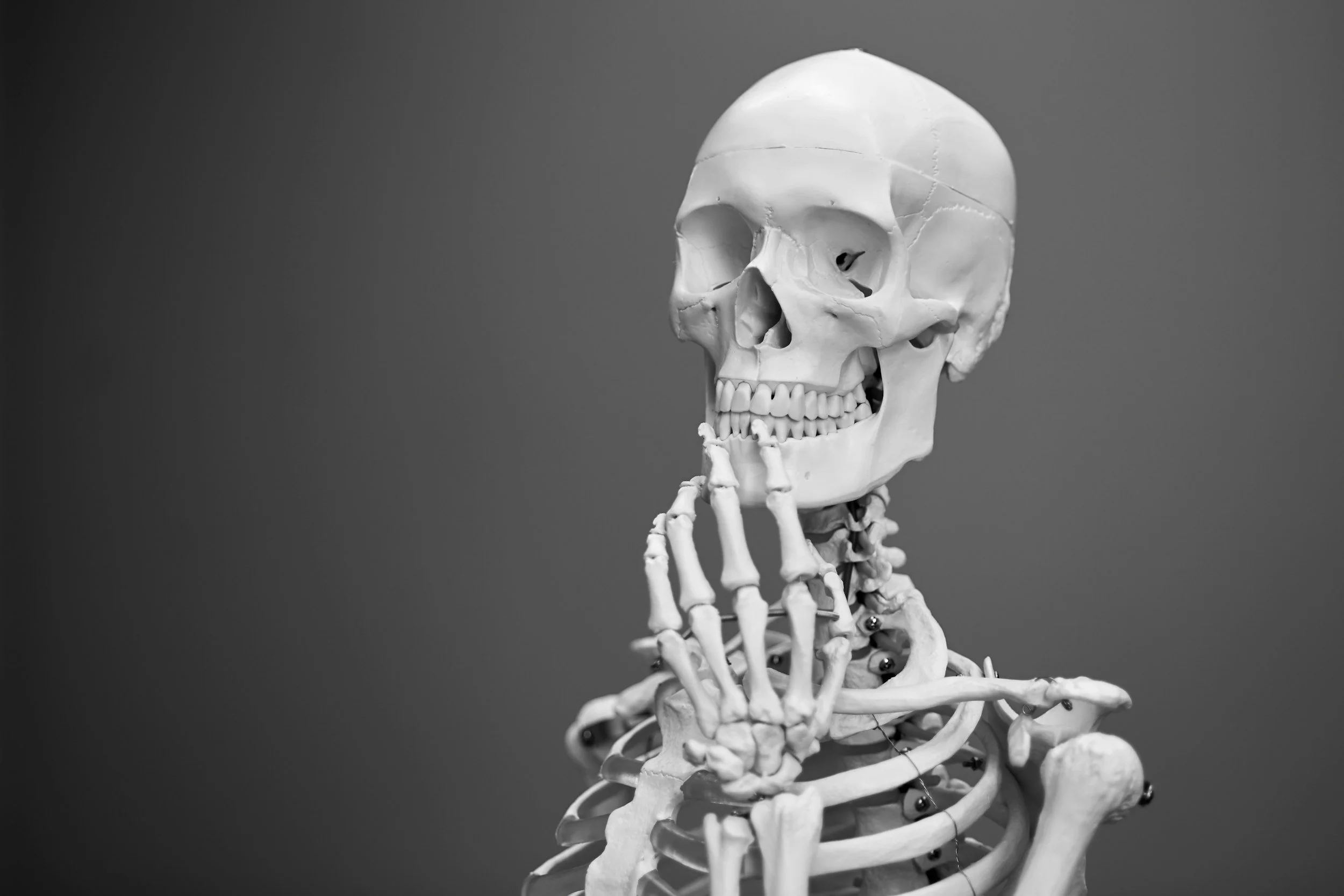
Pondering skeleton
Teeth and bones have a lot in common. They are both hard, contain calcium and help give structure to the body. So it makes sense that people often assume teeth are just another type of bone. But they are not. Teeth are made of several different tissues, and the way they respond to damage is very different from bone. One of the biggest differences is that bones can heal themselves. Teeth, for the most part, cannot.
What Is a Tooth Actually Made Of?
A tooth may look like one solid structure, but it is actually made up of several layers, each with a different job.
Enamel
Enamel is the hard outer covering of the tooth and is the hardest substance in the human body. It protects the more sensitive layers underneath and helps teeth withstand years of chewing, biting and temperature changes. But enamel has one major limitation: once it is lost, the body cannot grow it back. Enamel does not contain living cells, so if it is worn away by acid, grinding or decay, it cannot repair itself the way bone can. Very early mineral loss can sometimes be strengthened through remineralization with saliva and fluoride, but once enamel is physically gone, it does not regenerate.
Dentin
Underneath the enamel is dentin, a slightly softer tissue that makes up most of the tooth. Dentin contains microscopic channels that connect toward the nerve inside the tooth, which is one reason exposed dentin can cause sensitivity to cold, heat or sweets. Unlike enamel, dentin does have a limited ability to respond to irritation. The tooth can sometimes form additional dentin as a protective response, but that does not mean it can rebuild itself after significant damage.
Pulp
At the center of the tooth is the pulp. This is the living portion of the tooth and contains nerves, blood vessels and connective tissue. If decay, trauma or a crack reaches the pulp, the tissue can become inflamed or infected. Because the pulp is enclosed inside a hard structure, it cannot heal in quite the same way that soft tissue elsewhere in the body does.
Are Teeth Actally Bones?
Your teeth are not bones. And the reason why explains a lot about why cavities and cracks matter.
Why Can a Broken Bone Heal but a Broken Tooth Cannot?
Bone is living tissue that is constantly remodeling itself. When a bone fractures, specialized cells begin building new bone around the damaged area. Over time, the fracture can knit itself back together. Teeth are different because their outer structure does not have that same blood supply or regenerative system. If a tooth chips, cracks or loses enamel, the body cannot simply grow a replacement section. That is why dental treatment may be needed to restore the missing structure and protect what remains. Depending on the extent of the damage, that might mean bonding, a filling, a crown or another type of restoration.
Teeth Are Still Very Much Alive
Even though teeth are not bones and enamel cannot regenerate, teeth are not lifeless objects. The pulp inside each healthy tooth contains living tissue, and the surrounding ligaments and bone also play an important role in keeping the tooth healthy and responsive. That is why teeth can feel pressure, temperature and pain. It is also why a tooth can respond to injury, infection or changes in the bite.
Your Teeth Need a Little Extra Protection
Bones have an impressive ability to repair themselves. Teeth rely much more heavily on prevention.
Protecting enamel, treating decay before it progresses and addressing cracks or wear early can help preserve the natural tooth structure for as long as possible. Good brushing and flossing, fluoride, regular dental visits and paying attention to changes in sensitivity or discomfort all play a role.
So, are teeth bones?
No. They are actually something much more specialized, with one of the toughest materials in the human body on the outside and living tissue at the center. And because they cannot completely repair themselves, taking care of them before problems become larger is especially important.