
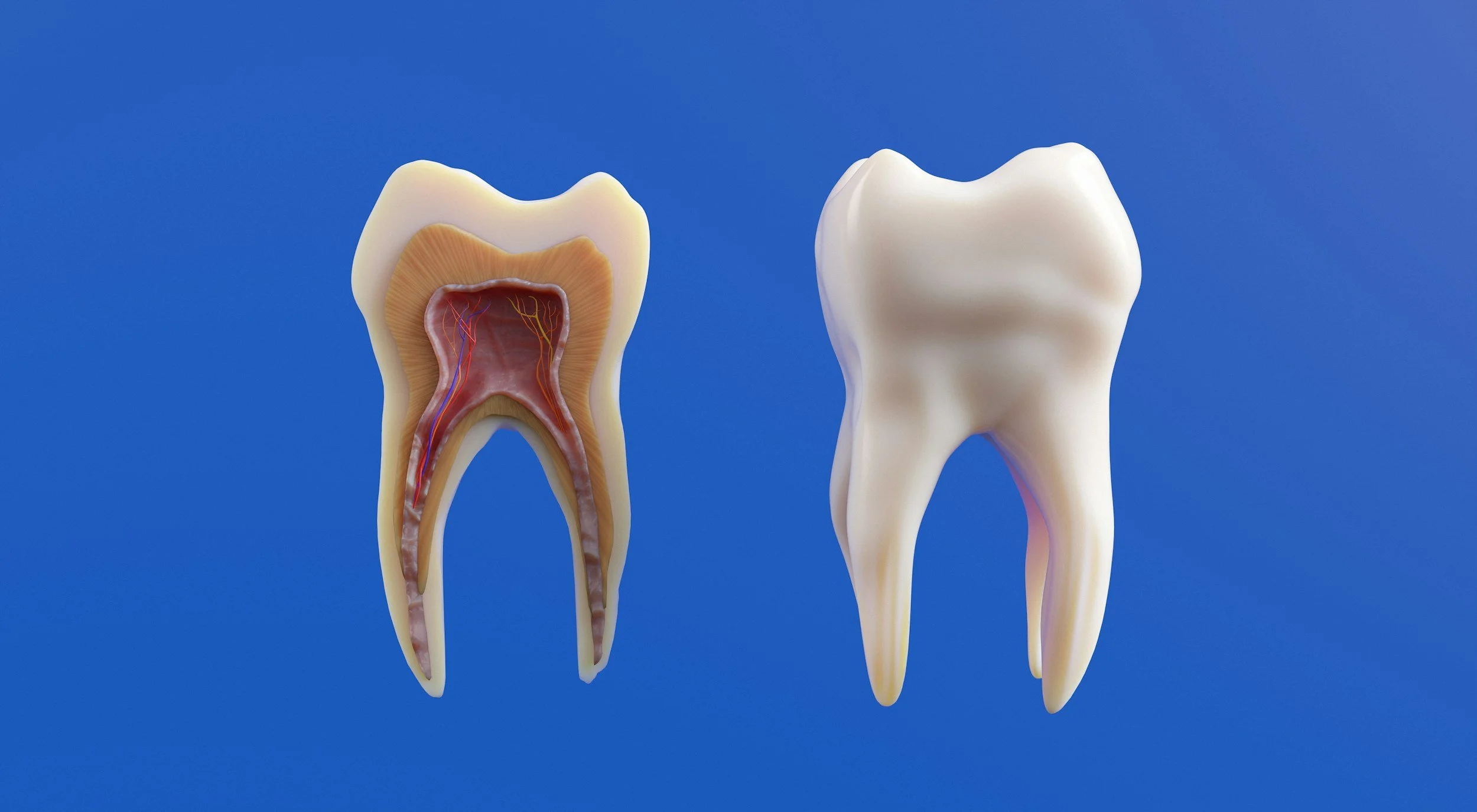
Image of a tooth and the exposed root structure
When people think about a “dead tooth,” they usually imagine severe pain. But surprisingly, a tooth can lose its vitality without causing much discomfort at all.
In some cases, the nerve inside a tooth becomes damaged slowly or stops functioning after an injury, and you may not realize anything has changed until we notice it during an exam or on an X-ray.
What Does It Mean for a Tooth to “Die”?
Inside every healthy tooth is a soft area called the pulp. The pulp contains nerves, blood vessels and connective tissue that help keep the tooth alive.
If the pulp becomes severely damaged by decay, trauma, a crack or another problem, its blood supply can be disrupted. Over time, the nerve tissue may stop functioning. Dentists often refer to this as a non-vital or necrotic tooth.
The hard outer portion of the tooth can still remain in place, which is why the tooth may look relatively normal even after the nerve inside is no longer healthy.
Why Wouldn’t It Hurt?
Pain usually comes from irritated or inflamed nerve tissue. If the nerve gradually loses its ability to function, pain may actually decrease or disappear.
That can create a false sense that the problem has resolved.
A tooth that hurt badly for a few days and then suddenly feels better is not always a good sign. Sometimes it means the nerve inside the tooth is no longer responding.
Other teeth may lose vitality with very little pain from the beginning, particularly after an old injury.
What Can Cause a Tooth to Lose Vitality?
Several different things can damage the pulp, including:
Deep decay
A crack or fracture
A blow to the mouth or face
Previous dental trauma
Repeated dental treatment on the same tooth
Infection that reaches the center of the tooth
One of the more surprising causes is trauma that happened years earlier. A tooth that was hit during childhood, sports or an accident may appear fine at the time but develop problems much later.
Are There Other Signs?
Pain is only one possible symptom. A tooth that is losing vitality may also show other changes, including:
Darkening or discoloration
Swelling around the gum
A small bump or “pimple” on the gum
Tenderness when biting
A bad taste or odor
Sensitivity that changes or disappears unexpectedly
Sometimes there are no noticeable symptoms at all.
How We Evaluate It at Calleros Dental
At Calleros Dental, we look at the full picture rather than relying on pain alone. We may check how the tooth responds to temperature or other vitality tests, examine the surrounding gum tissue and use X-rays when appropriate.
These steps can help us determine whether the pulp is still healthy and whether there are signs of infection around the root.
What Happens If a Non-Vital Tooth Is Left Alone?
Even if the tooth does not hurt, bacteria may still be present inside the tooth or around the root. That infection can sometimes spread into the surrounding bone and tissue.
This is why a tooth should not be judged only by whether or not it hurts.
Depending on the condition of the tooth, treatment may include root canal therapy, restoration of the tooth or, in some situations, removal if the tooth cannot be saved.
If Something Feels Different, Come See Us
Dental pain is one of the ways your body signals that something may be wrong, but the absence of pain does not always mean everything is healthy.
If you notice a tooth changing color, swelling, tenderness, a strange taste, or if you have a tooth that was injured in the past and just does not feel quite right, come see us at Calleros Dental for an evaluation.
Sometimes a tooth can lose vitality quietly. The sooner we can take a look, the better chance we have of understanding what is happening and recommending the right next step.